
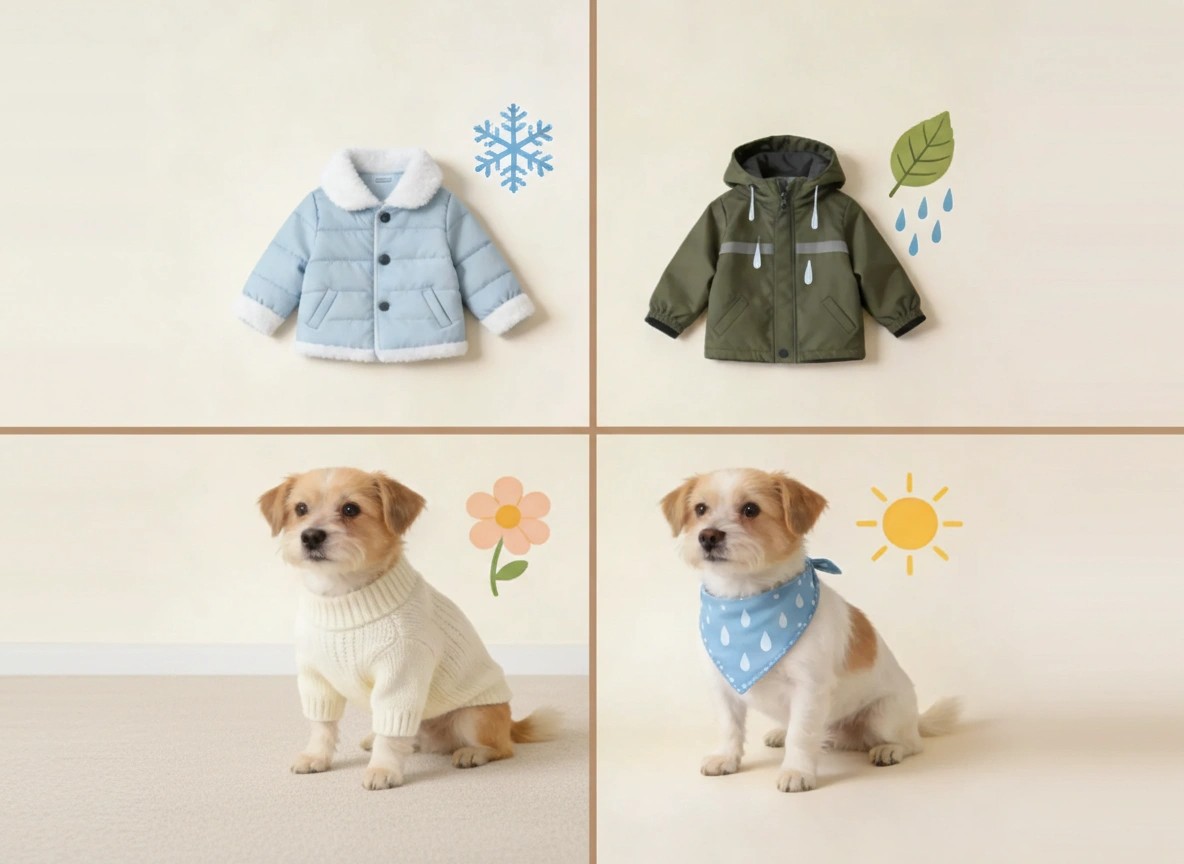
Building a Seasonal Wardrobe for Your Pet: What You Actually Need
After helping thousands of pet parents build wardrobes for their companions, I've noticed a pattern: most people either overbuy (closets stuffed with clothes their pets never wear) or underbuy (one threadbare sweater doing year-round duty). Finding the balance requires understanding what your pet actually needs versus what's simply cute.
This guide cuts through marketing noise to focus on genuinely useful pieces for each season. Not every pet needs every item, and that's okay. The goal is a functional wardrobe that enhances your pet's comfort without overwhelming your budget or storage space.
Understanding Your Pet's Actual Needs
Before discussing specific items, let's establish whether your pet benefits from clothing at all. Not every animal needs a wardrobe, and forcing clothes on pets who don't require them creates unnecessary stress.
Pets Who Benefit from Clothing
- Short-haired breeds in cold climates: Greyhounds, Chihuahuas, Whippets, and similar breeds lack the fur density for cold weather protection.
- Small dogs with low body mass: Toy breeds lose body heat quickly and struggle to maintain temperature in cold or wet conditions.
- Senior pets: Older animals often have difficulty regulating body temperature and benefit from additional warmth.
- Pets with health conditions: Arthritis, thyroid issues, and certain other conditions make temperature regulation challenging.
- Hairless breeds: Chinese Cresteds, Sphynx cats, and similar breeds need protection from both cold and sun.
Pets Who Typically Don't Need Clothing
- Thick-coated breeds: Huskies, Malamutes, Saint Bernards, and similar breeds have natural insulation.
- Cats in general: Most cats dislike clothing and self-regulate temperature effectively. Exceptions exist, but default to no clothing unless there's a specific reason.
- Healthy, medium-to-large dogs with normal coats: Labs, Golden Retrievers, and similar breeds generally have adequate natural protection.
Winter Wardrobe Essentials
Winter is when pet clothing proves most valuable, but you don't need a dozen coats. Focus on versatility and genuine warmth.
The Core Winter Piece: Insulated Coat
This is your primary investment. A quality insulated coat should:
- Cover from neck to tail base
- Protect the chest and belly (where heat loss occurs fastest)
- Fasten securely without restricting movement
- Feature water-resistant outer layer
- Provide adequate insulation without overheating indoors
When to use: Temperatures below 45°F (7°C) for short-haired or small dogs, below 30°F (-1°C) for dogs with moderate coats.
What to look for: Quilted designs with synthetic or down fill, adjustable belly straps, and collar protection. Avoid purely decorative coats with minimal insulation—they provide little actual warmth.
Winter Shopping Priority List
- Essential: One high-quality insulated coat
- Useful: Warm sweater for moderately cold days
- Optional: Boots for snow/ice protection (if your area experiences harsh winters)
- Skip: Multiple coats in slightly different weights—one versatile coat handles most situations
Layering Piece: Warm Sweater
For temperatures too cold for no clothing but not cold enough for the heavy coat, a knit sweater provides middle-ground protection. Choose natural fibers (wool, cotton blends) that breathe while insulating.
Ideal for: Indoor use in drafty homes, outdoor walks on cool but not frigid days, layering under coats in extreme cold.
The Boot Question
Boots divide pet parents. Some swear by them; others find them more hassle than help. Whether you need them depends entirely on local conditions.
Consider boots if:
- You live where roads are salted/chemically treated (this can burn paws)
- Your area experiences icy conditions that cut paw pads
- Your pet has injured or sensitive paws
- You do winter hiking where terrain is rough
Skip boots if: You live in mild climates, your pet strongly resists them, or local conditions don't pose paw hazards. Simple paw balm often suffices for minor protection needs.
Spring Wardrobe Transitions
Spring's unpredictability—warm days followed by chilly nights, sudden rain showers—requires different thinking than winter's consistent cold.
The Essential: Lightweight Raincoat
This might be the most useful piece in your pet's entire wardrobe. A good raincoat keeps your pet comfortable during wet weather while being light enough not to overheat on warmer days.
Key features:
- Fully waterproof (not just water-resistant)
- Covers back and extends under belly
- Breathable fabric to prevent overheating
- Easy on/off (rainy walk prep shouldn't be a struggle)
- Reflective elements for low-light visibility
When to use: Any wet conditions—rain, snow, morning dew that soaks fur. Also useful for muddy conditions to minimize bath frequency.
Lightweight Layer
Spring mornings and evenings can be chilly even when afternoons are warm. A thin fleece or light cotton sweater provides just enough warmth without causing overheating.
Ideal for: Early morning walks, evening outdoor time, air-conditioned indoor spaces that run cold.
Summer: Less is More
Summer is when many pet parents shop based on cute factor rather than utility. Resist the temptation to overdress your pet when they're already dealing with heat.
What Most Pets Don't Need in Summer
- T-shirts (provide no cooling benefit, often increase heat retention)
- Thick fabrics of any kind
- Multiple layers
- Anything primarily decorative
What Some Pets Might Need
Sun protection for hairless or light-colored pets: Thin, light-colored, breathable fabric can prevent sunburn on exposed skin. This applies mainly to hairless breeds or very short-coated, light-colored dogs.
Cooling accessories: Bandanas or vests designed with cooling technology (water-activated or gel-based) can help heat-sensitive breeds. These work through evaporation, unlike regular clothing that traps heat.
Post-swim coverage: A lightweight, quick-dry towel-type covering can be useful after swimming to prevent car seats from getting soaked, but this is convenience rather than necessity.
Fall: Transitional Essentials
Fall mirrors spring in unpredictability, making layering pieces most valuable.
Medium-Weight Sweater or Light Jacket
As temperatures drop gradually, you need something warmer than summer's nothing but lighter than winter's heavy coat. A medium-weight sweater or uninsulated jacket bridges this gap.
Ideal characteristics:
- Natural fibers that breathe (cotton, wool blends)
- Easy to layer under heavier coat when needed
- Machine washable (fall means more outdoor time and muddy adventures)
- Durable construction for extended daily use
The Minimalist Wardrobe: What You Can Get Away With
If storage space is limited, budget is tight, or you simply prefer minimal possessions, you can maintain pet comfort with surprisingly few pieces.
The 3-Piece Wardrobe (suitable for most climates)
- Insulated winter coat - handles cold and can be removed/added as temperatures fluctuate
- Waterproof rain jacket - keeps pet dry and comfortable in wet conditions year-round
- Medium-weight sweater - fills the gap between naked and full coat, works for moderately cool conditions
These three pieces, chosen well, cover probably 95% of situations requiring pet clothing in moderate climates.
Special Considerations by Climate
Extreme Cold Climates (Extended winters below 20°F/-6°C)
Add to basic wardrobe:
- Extra-heavy insulated coat with wind protection
- Paw protection (boots or paw balm minimum)
- Indoor sweaters for drafty homes
Tropical/Warm Year-Round Climates
Minimize wardrobe:
- Light rain jacket for monsoon/wet seasons
- Sun protection for hairless breeds
- Skip most other clothing—natural fur handles tropical heat better than any fabric
Moderate/Four-Season Climates
This is where the 3-piece minimalist wardrobe shines. Insulated coat, rain jacket, and medium sweater handle the full range of seasonal conditions.
Care and Maintenance: Making Pieces Last
Quality pet clothing represents an investment. Proper care extends useful life significantly.
Washing Guidelines
- Frequency: After every 2-3 wears for items worn against skin, after each use for rain gear.
- Method: Follow care labels, but generally cold water and gentle cycle work for most pieces.
- Drying: Air dry when possible. High heat damages elastic, weakens seams, and can shrink natural fibers.
- Storage: Clean thoroughly before storing seasonally. Dirty fabric attracts pests and develops odors.
When to Replace
- Elastic loses significant stretch (garment won't stay in place)
- Waterproofing fails despite rewaterproofing treatments
- Insulation compresses and loses loft
- Fabric thins enough to see through
- Your pet outgrows the piece (puppies, weight changes)
Quality pieces often last 3-5 years with proper care. If you're replacing items annually, you're either buying poor quality or not caring for them properly.
Building Your Wardrobe Gradually
You don't need to purchase everything at once. Build thoughtfully over time:
Year 1: Start with the most critical piece for your climate (likely winter coat or rain jacket). Observe what situations you encounter that aren't adequately covered.
Year 2: Add one or two pieces that address gaps you identified. Maybe you thought you didn't need boots until experiencing salted winter sidewalks, or discovered your pet gets cold on fall evenings.
Year 3+: Replace worn items and refine based on actual use patterns. You'll know by now what gets worn regularly and what never leaves the drawer.
Signs You're Overdoing It
Pet clothing should enhance your life and your pet's comfort, not complicate it. You might be overdoing it if:
- You spend more than five minutes deciding what your pet wears for a basic walk
- More than half your pet's wardrobe has never been worn
- You're buying items because they're cute despite no functional purpose
- Your pet shows stress or avoidance when you approach with clothing
- Storage has become a problem
Remember: your pet doesn't care about fashion. They care about comfort and your attention. A smaller wardrobe that gets regular use serves them better than an extensive collection that creates stress.